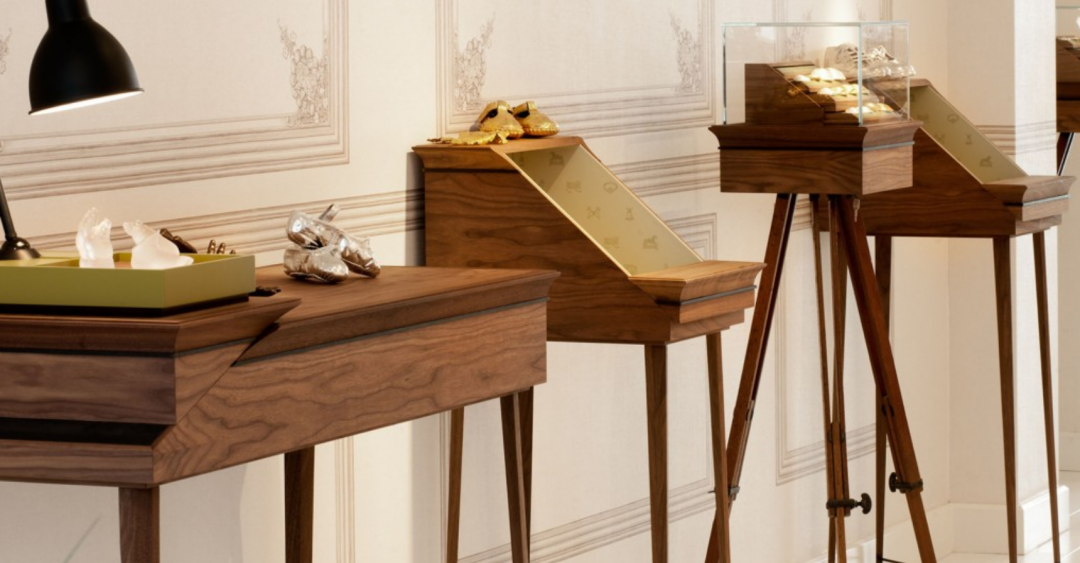
Noble Russell was commissioned by design agency Camouflage to create a complete collection of bespoke display furniture for Wrightson & Platt’s first retail premises on Walton Street, Knightsbridge.
Founded in 1999 by Denise Wrightson and Vicky Platt, Wrightson & Platt had established an international reputation for creating highly detailed life-cast sculptures and jewellery. Their work transformed casts taken from hands, feet and other subjects into individual pieces in materials including bronze, glass, silver and gold. By the time the Walton Street showroom opened, the company had its own foundry in South London and had begun building an international following for its distinctive approach to sculpture and keepsakes.
Creating a retail environment for such an unusual collection presented a very different furniture brief. The furniture could not simply provide storage or display space; it needed to act as a carefully considered backdrop for the sculptures and jewellery themselves, allowing the intricate craftsmanship of Wrightson & Platt’s work to remain the focus.
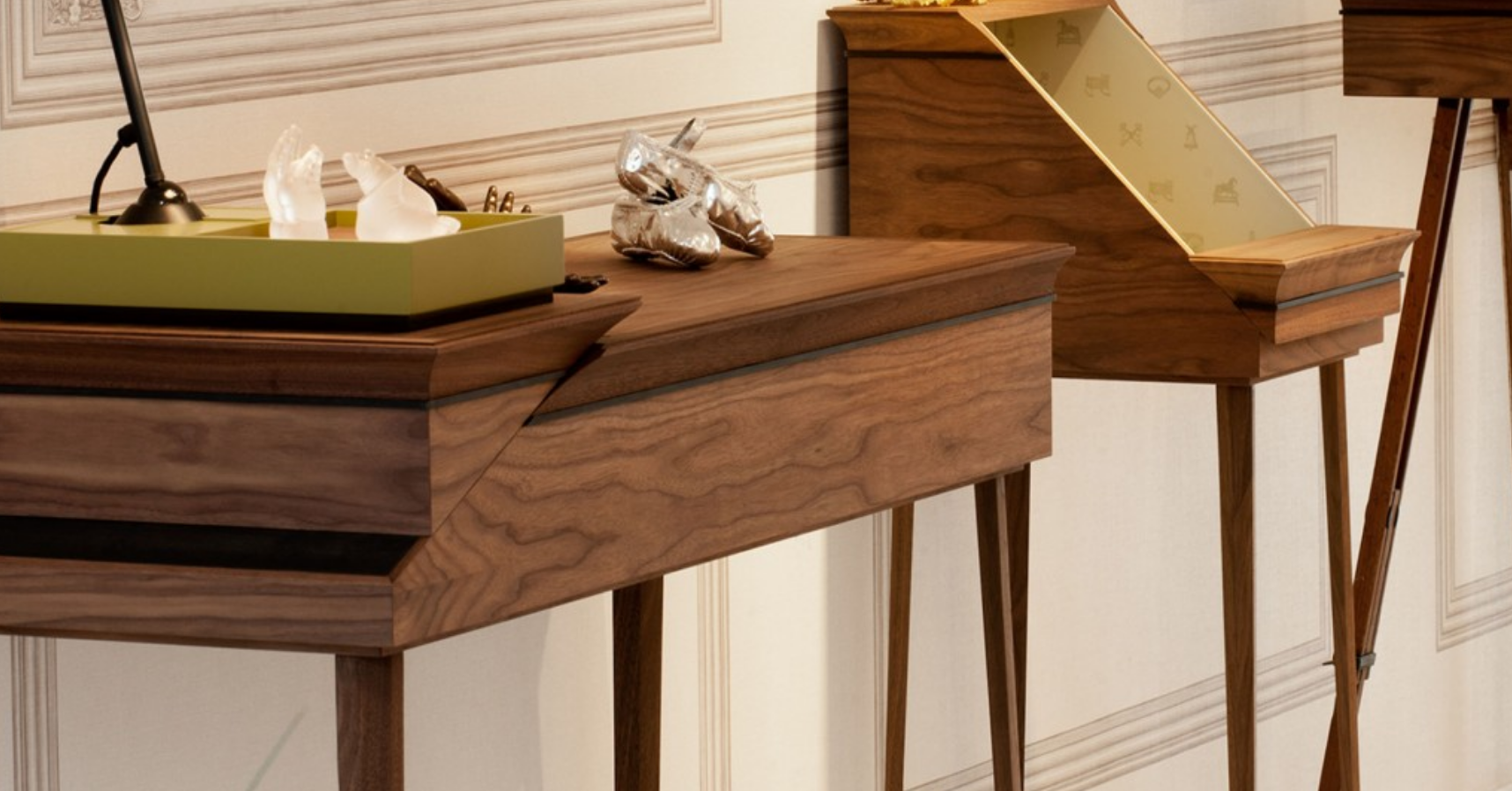
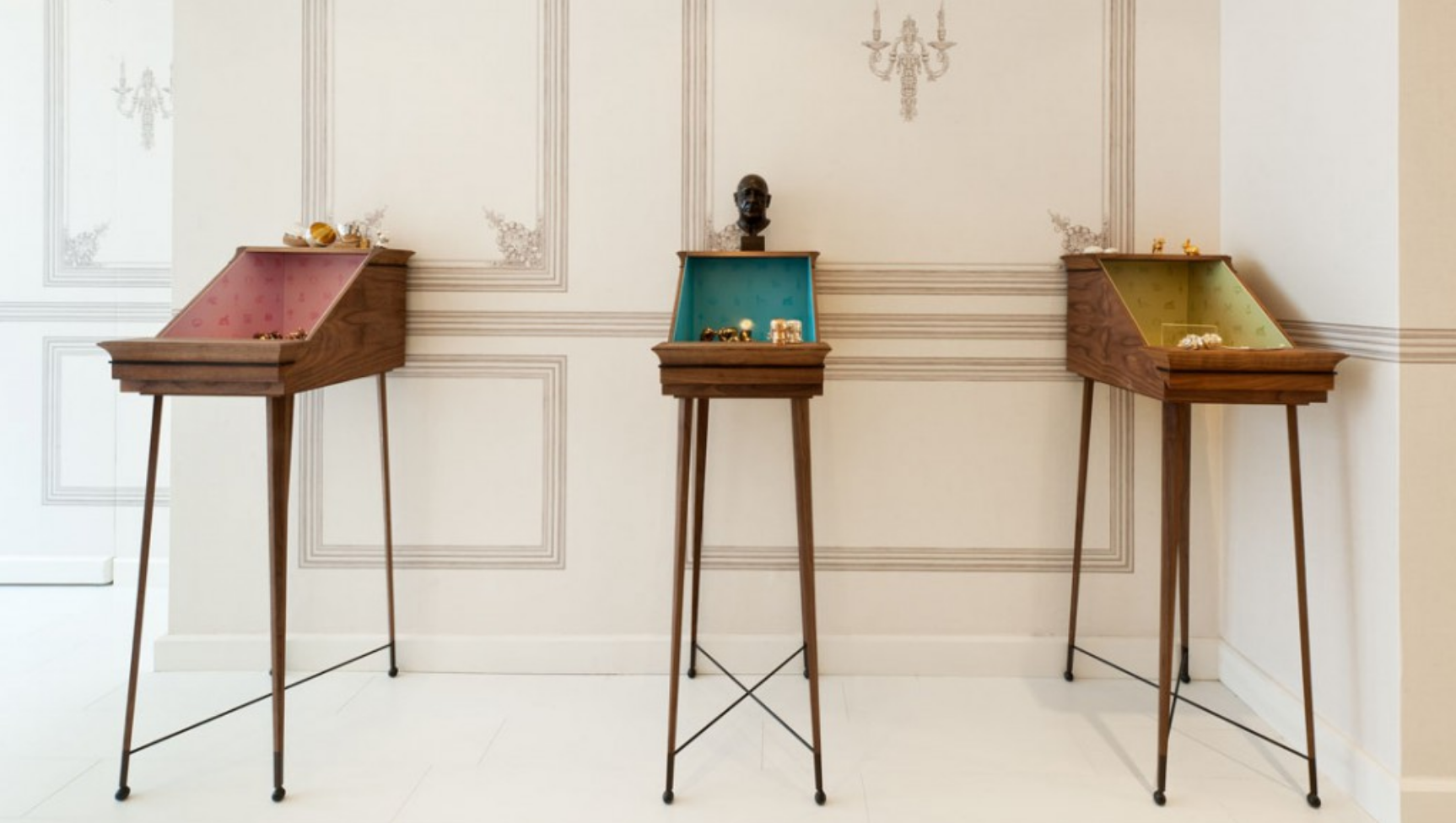
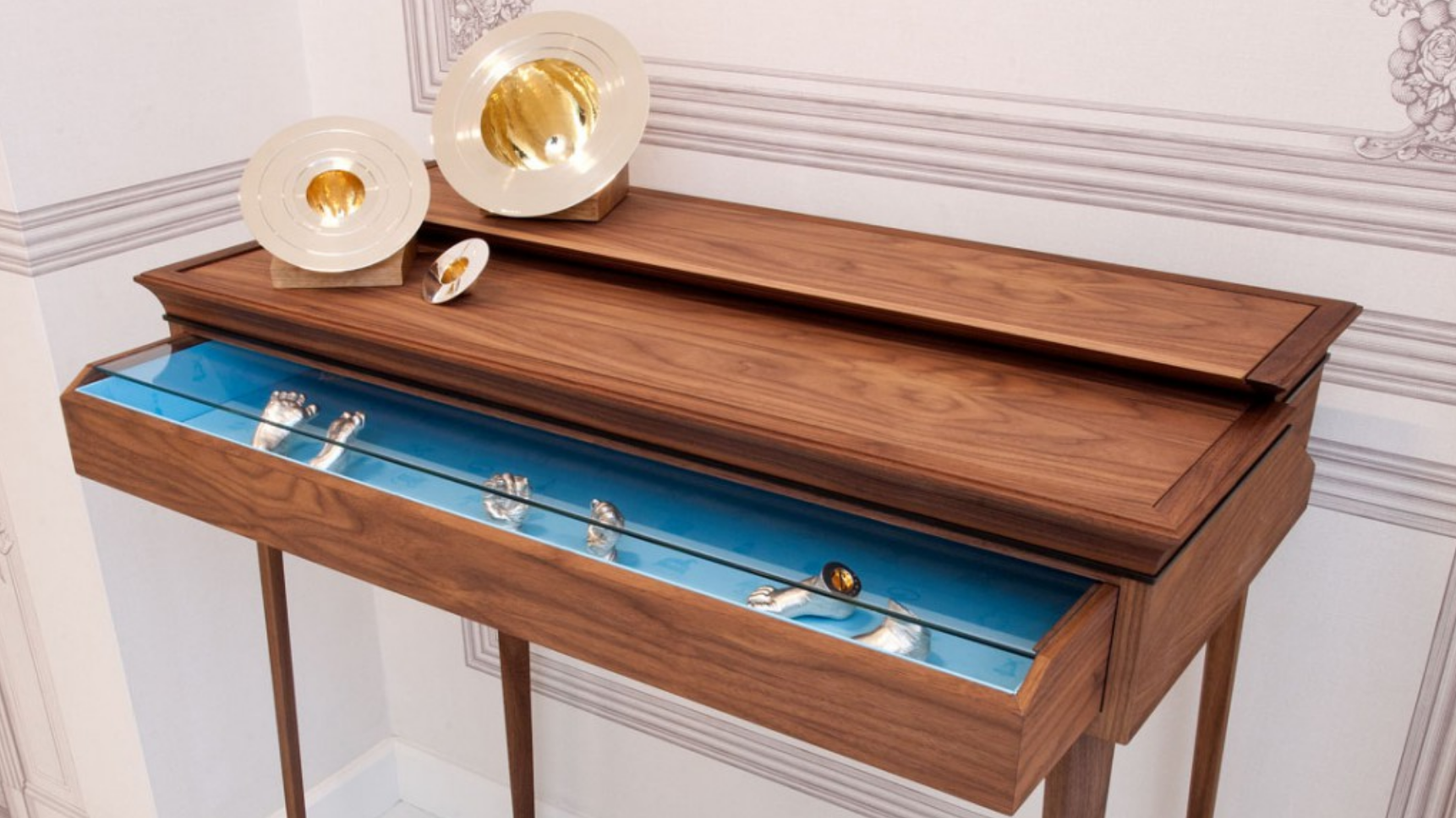
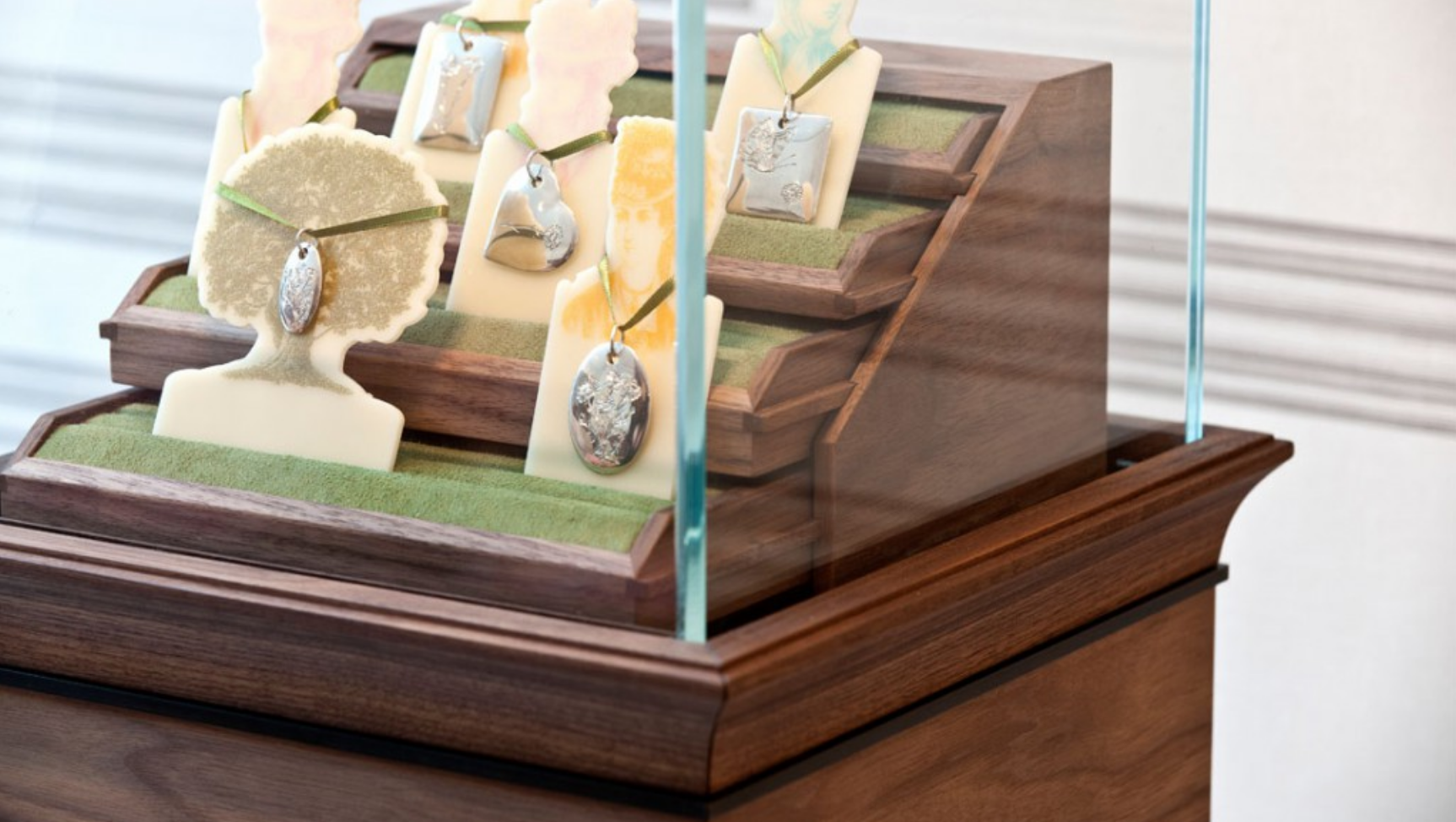
Working alongside Camouflage, Noble Russell developed and manufactured a complete range of delicate walnut furniture for the showroom. The pieces were designed specifically for the space and for the objects they were intended to display, combining fine cabinet making with the practical requirements of a working luxury retail environment.
Walnut was used throughout the collection, creating a warm and understated material palette that complemented the precious metals, glass and sculptural forms on display. The cabinetry was deliberately refined, with the detailing and proportions carefully resolved so that the furniture supported the work rather than competing with it.
This was very much a project where precision mattered. Display furniture for sculpture and jewellery needs to be beautifully finished from every angle, while also providing the strength, stability and storage required in a commercial environment. The cabinets therefore needed to combine the appearance of fine furniture with the practical demands of retail display.
The project also provided an opportunity for Noble Russell to demonstrate the breadth of its cabinet-making skills. Although the company’s portfolio includes substantial hospitality furniture, larger seating packages and commercial interiors, smaller-scale pieces can require an equally high level of precision. With display cabinetry, details that might disappear within a larger installation become much more visible, making the quality of the construction and finish particularly important.
There was also a natural connection between the two businesses’ approach to craftsmanship. Wrightson & Platt’s sculptures and jewellery were individually created and highly personal, while Noble Russell’s furniture was manufactured specifically for their showroom rather than selected from an existing range. The result was an environment in which the display furniture felt like part of the brand’s identity rather than simply a retail fixture.
The Walton Street showroom represented an important stage in Wrightson & Platt’s development, giving the company a prestigious London presence from which to present its work to clients. Contemporary coverage described the premises as the company’s first shop and highlighted the range of life-cast sculpture, jewellery and keepsake pieces displayed there.
For Noble Russell, the project remains a particularly good example of what bespoke furniture can achieve within a specialist retail environment. The brief called for restraint rather than spectacle: the walnut cabinetry needed to be elegant enough to complement exceptional pieces of sculpture and jewellery, while being sufficiently practical for everyday use.
It is precisely this kind of project that demonstrates the value of fine bespoke manufacture. When furniture is designed around the objects, architecture and purpose of a particular space, every proportion, material and detail can be considered as part of the finished environment. At Wrightson & Platt, the result was a collection of understated walnut cabinets and display furniture that allowed the craftsmanship of the sculptures and jewellery to take centre stage.